Technology

The stack that makes FireFetch feel simple.

FireFetch wraps proven media tools, metadata providers, local caching, and a clean browser interface into one practical app.

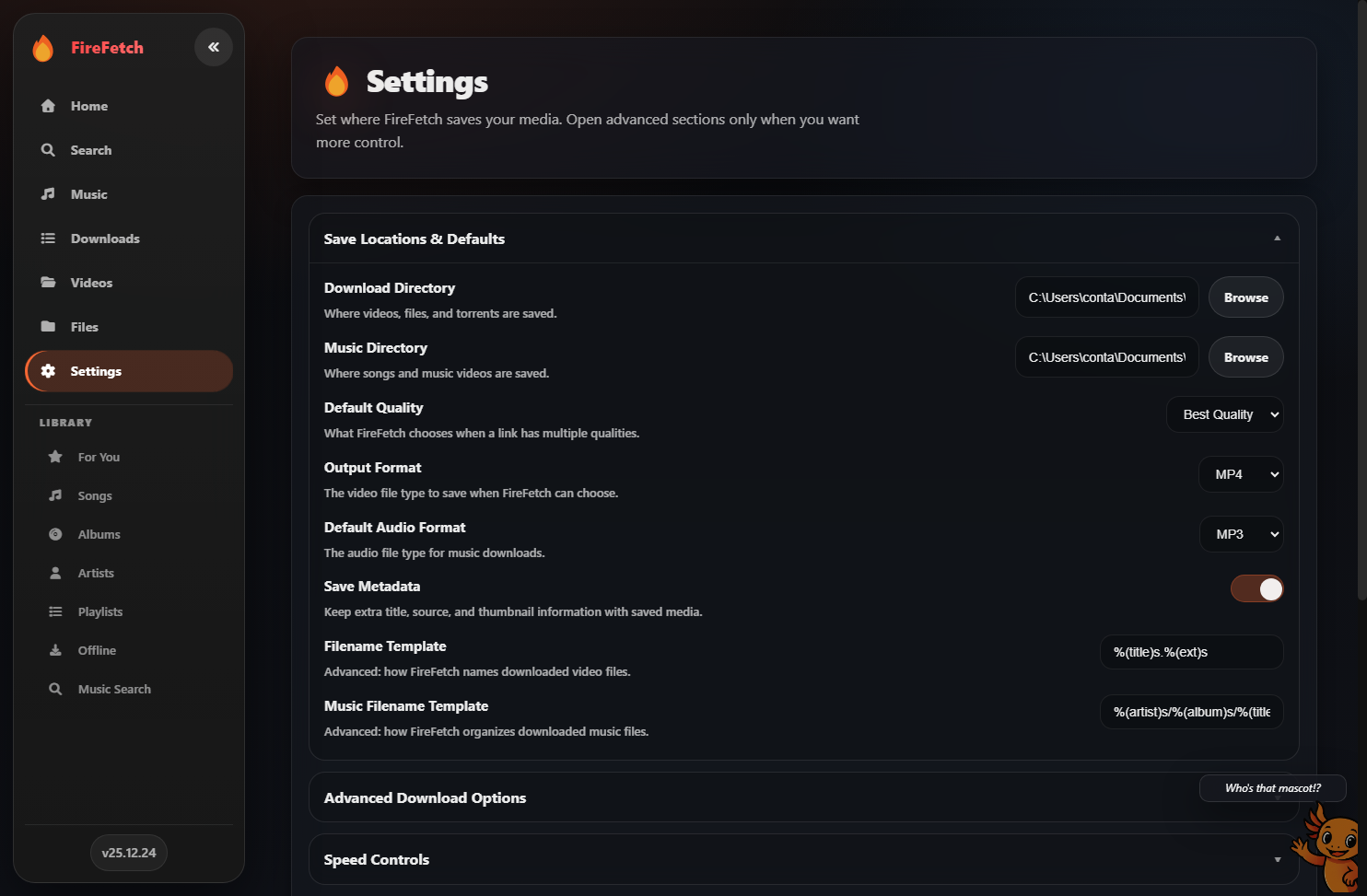
FireFetch settings page showing advanced app tools

Core systems

The services and engines doing the work.

Express.js

The local API layer powers the browser interface, download queue, settings, library views, dependency checks, file browsing, and media actions.

  • Local app API routes
  • Queue and settings endpoints
  • Library and file browsing
  • Dependency/version checks

Server-Sent Events

The downloads page streams queue state as work happens, so progress, failures, and completed jobs update without a manual refresh.

  • Realtime queue state
  • Progress updates
  • Download status changes
  • Processing visibility

yt-dlp

Fetches video metadata, format lists, playlists, thumbnails, titles, and source URLs. FireFetch uses it to understand what a pasted link can become before queuing the download.

  • Video and playlist analysis
  • Quality and format selection
  • Music search fallback
  • Cookie-backed restricted content support

FFmpeg

Handles the media finishing work after downloads complete, including merging audio/video streams and preparing files in useful containers.

  • Audio/video merging
  • Post-processing
  • Container conversion support
  • Music and video output workflows

aria2c

Accelerates direct downloads with segmented transfers and connection controls. It also supports torrent-oriented workflows where appropriate.

  • Multi-connection downloading
  • Segment sizing
  • Retry behavior
  • Progress parsing for the queue

Peerflix

Supports torrent media handling inside the app’s local workflow, giving FireFetch another path for media sources beyond standard HTTP downloads.

  • Torrent stream handling
  • Local queue integration
  • Download status tracking

Metadata intelligence

More than files with filenames.

FireFetch enriches the local library with titles, artists, albums, covers, descriptions, release classifications, and artwork fallbacks.

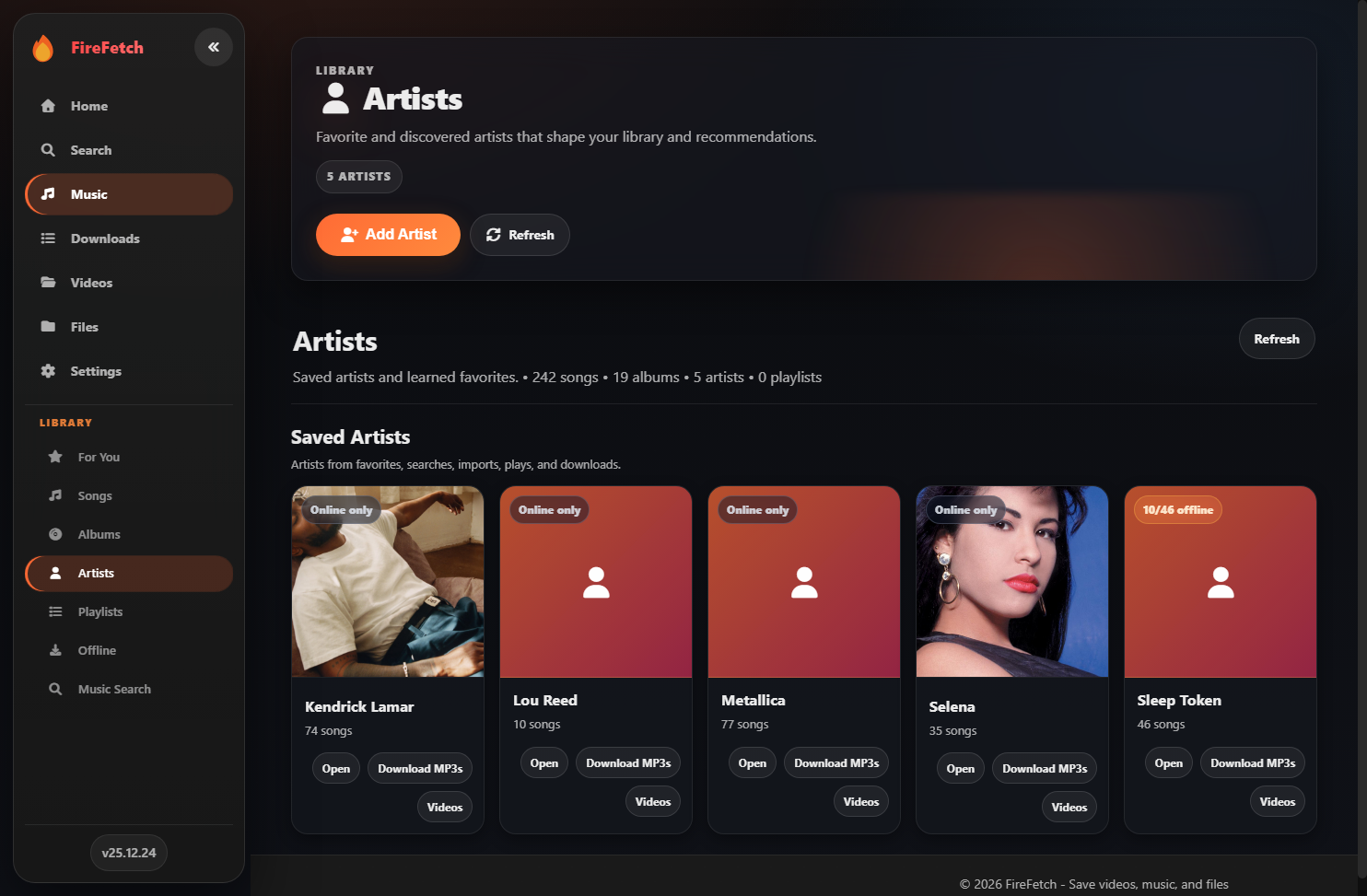
FireFetch artists page with saved artist artwork

YouTube Music metadata

Used for music search, artist suggestions, albums, tracks, and official artist pages when available.

MusicBrainz

Provides artist discography grounding so FireFetch can distinguish official albums from singles, compilations, bootlegs, and unrelated results.

Wikimedia fallback

When a major artist lacks a usable image from the primary metadata source, FireFetch can look up a conservative Wikipedia/Wikimedia page image and cache it locally.

Local persistent cache

Metadata responses and remote artwork are saved locally so repeated browsing does not keep asking external services for the same information.

No AI generation

FireFetch does not use AI or generated recommendations. Music suggestions come from favorite artists, official album metadata, and local library signals.

Local-first behavior

Designed for ownership, not endless re-fetching.

Media index

Existing downloads are indexed with file signatures and companion metadata so library pages can load without repeated full scans.

Settings JSON

Download directories, output formats, queue behavior, cookie file paths, speed controls, and preferences are stored locally.

Cookie-aware workflows

Users can provide cookies for sites that require authentication, while FireFetch keeps those paths local to the machine.

Portable build model

The app is designed around a self-contained distribution with dependencies, downloads, cookies, settings, and resources living alongside the executable.

FireFetch

A serious media tool that still feels like an app.

All the sharp tools are there. FireFetch just makes them easier to use.